A special thank you to Susan Sorensen for the photo this morning… The full moon last night coming up over the North Dakota prairie.
USDA and NASA expand cooperation on agricultural data
USDA and NASA announced an agreement on October 24 to strengthen agricultural statistics through satellite observations, geospatial analysis, and improved methods for estimating crop conditions, acreage, yields, and disaster impacts.
The agencies say their cooperation will support USDA’s broader data modernization effort. More accurate information could eventually help producers evaluate feed markets and improve disaster assessments, but those benefits will depend on the projects developed and their results.
The four-page memorandum of understanding establishes a framework for cooperation. It does not commit either agency to transfer money. Projects involving transfers of funds, services, property, or personnel would need separate agreements, appropriate legal authority, and available funding.
For farmers and ranchers, the announcement creates no application window, payment entitlement, or immediate change to published crop estimates.
It also raises questions about how future projects will handle information identifying individual operations. Existing confidentiality laws remain applicable, but the agreement does not spell out detailed rules for linking satellite observations with producer records, contractor access, or correcting inaccurate estimates.
Those questions warrant answers as implementation proceeds. The agreement itself does not establish that confidential farm information will be used for enforcement.
The next test is what the agencies fund, publish, and protect in practice.
BLM herbicide treatments raise questions about forage and restoration
Federal plans to spray invasive grasses on Western rangelands are raising a practical question for livestock producers: What replaces the forage being removed, and how long will that take?
In an October 20 announcement, BLM and the Nevada Department of Wildlife outlined aerial herbicide treatments across approximately 18,600 acres burned in the 2026 Bug Fire north of Reno. The project targets cheatgrass and medusahead in the Petersen Mountains, Antelope Valley, Bedell Flat and Dogskin Mountains.
BLM says reducing those annual grasses will limit wildfire fuels and help existing and newly seeded native vegetation compete. Its notice describes a pre-emergent herbicide but does not name the product, application rate or livestock grazing restrictions.
Separately, BLM scheduled treatment of approximately 3,875 acres in Utah’s Clarks Valley from October 26 through November 13, weather permitting, with similar wildfire-reduction and habitat-restoration goals.

Southern Oregon rangeland - the land on the left of the road has been treated with herbicide and to the right, grazed through the winter with no treatment. Photo courtesy of Jack Payne.
Nevada ranchers have questioned whether suppressing annual grasses sacrifices usable livestock forage without ensuring replacement plants will survive. In comments shared with the RANGE Report, Smoke Creek rancher Brent Espil also alleged his family was not consulted about spraying affecting their operation. That allegation requires examination of the specific project and agency notification records; it should not be assumed to describe the separate Bug Fire treatment.
Research shows why results deserve scrutiny. A 2021 USDA Agricultural Research Service abstract reported substantial cheatgrass suppression in experimental plots, but declining native-grass establishment over three years. Native grasses performed worse where annual precipitation fell below 10 inches. That study does not establish outcomes for either current project.
The questions are concrete: How much forage is lost initially? What replaces it? How are rainfall and erosion measured? And what happens when reseeding fails to restore dependable feed on working rangelands?
Wyoming mine proposal raises stock-water and grazing questions
A proposed bentonite mining project north of Lovell, Wyoming, would disturb a livestock watering pond and temporarily remove reseeded ground from grazing, putting water access and reclamation timing before federal land managers.
The Bureau of Land Management’s Cody Field Office opened a 30-day public-comment period October 26 on American Colloid Company’s proposed Sims Mine Plan of Operations in Big Horn County. The notice begins public review; it does not authorize mining.
The company’s plan proposes approximately 299 acres of disturbance. One portion would involve mining through a pond used to water livestock, then reconstructing the pond and associated drainage before spring runoff.
American Colloid says the water-right holder has agreed to that arrangement. The plan references a signed agreement, but that document was not available among the records reviewed for this report. Other areas that seasonally hold water would not all be restored as ponds.
The proposed reclamation plan calls for returning disturbed land to wildlife habitat, livestock grazing and recreation. However, it also calls for restricting livestock use for at least two years after seeding, through fencing or agreements with affected public-land allotment holders.
Mining could continue for roughly 30 years, depending on market demand and weather, with backfilling and reclamation following operations. That does not mean every disturbed acre would remain unavailable for the entire project.
For affected ranchers, the immediate questions concern how much usable pasture would be unavailable at any one time, whether replacement stock water would be ready when needed, and who would maintain temporary fences.
Public review gives permittees and neighboring landowners an opportunity to seek clear commitments before a decision. The final authorization, if approved, would determine which protections become enforceable requirements.
Comments may be emailed to [email protected] or mailed to the Cody Field Office, Attn: Sims Project Comments, 1002 Blackburn Street, Cody, WY 82414.
Flooding disrupts Navajo communities; livestock assistance available
Flooding along the San Juan River has displaced families, restricted travel and damaged utilities across the Four Corners region, leaving livestock owners facing difficult questions about access, feed and safe water.
The Navajo Nation Council’s October 25 update, describing an incident-command briefing the previous day, identified assistance for livestock and domestic animals, including hay, kennels and vaccines. Residents can contact Incident Command at 928-730-8365 for information about available resources.
Officials reported that the eastbound lane of the Shiprock Bridge on U.S. 64 had reopened under restricted conditions. Police were allowing 10 vehicles across at a time, with priority for emergency responders. Producers should confirm current restrictions before arranging livestock movements or feed deliveries.
Navajo Tribal Utility Authority also reported that flooding damaged wastewater facilities and holding ponds in Farmington and Bloomfield, releasing sewage into the San Juan River. The amount released remained undetermined. Water-system repairs and power outages added to the disruption.
Downstream, the National Weather Service’s October 25 afternoon bulletin maintained a flood warning between Four Corners and Mexican Hat through 6 a.m. MDT October 27, including Aneth, Montezuma Creek and Bluff. Forecast river crests should not be confused with confirmed observations.
Around Farmington, AP reported October 25 that evacuations continued while crews inspected neighborhoods for damaged utilities, contaminated floodwater and other hazards. Falling river levels did not mean properties were safe to reenter.
The reviewed updates provide no verified livestock-loss total or clearance for affected stock-water sources. Recovery will require documenting damage while officials assess roads, utilities and water safety.
USDA selects eight fertilizer projects; savings depend on construction
USDA announced October 22 that eight fertilizer manufacturing projects will advance through its FIELDS funding process, representing more than $1.34 billion in proposed investment, including approximately $573 million in proposed federal funding.
The selections cover new plants and expansions:
TalusAg: Twenty modular ammonia units at 11 locations across Iowa, Kentucky, Minnesota, Tennessee, Nebraska, Illinois, and South Dakota.
Peace Valley: Expanded fertilizer manufacturing in Bartow, Florida.
PCI Nitrogen: Modernization of facilities producing ammonium sulfate and urea in Pasadena, Texas, and St. Helens, Oregon.
Intrepid Potash: A new sulfate of potash manufacturing facility near Carlsbad, New Mexico.
AdvanSix: Modernization and expansion of an ammonia facility in Hopewell, Virginia.
SUL4R-PLUS Illinois: An additional sulfur fertilizer manufacturing line and improvements to storage and transportation infrastructure in Marissa, Illinois.
True Organic Products: Expanded production using agricultural byproducts at facilities in Helm, California; Boardman, Oregon; and Arlington, Arizona.
Agriculture Project Holdco: Facilities converting dairy manure into liquid ammonium nitrate fertilizer in Lewis, Kansas, and Fair Oaks, Indiana.
Iowa Capital Dispatch reported that USDA staff told reporters the projects were expected to begin construction within weeks and reach completion in 2027 or 2028. Those dates remain expectations, rather than documented construction milestones.
USDA economists project that additional production could eventually reduce nitrogen fertilizer prices by 4.4% and potash prices by 5.3%. Those estimates depend on facilities becoming operational; they are not reductions already available to producers.
For ranchers growing hay, pasture or feed crops, more dependable fertilizer supplies could help control input costs. Dairy operations could also gain additional outlets for manure.
The practical test comes after selection: securing financing, completing construction and delivering competitively priced products. Producers should continue budgeting from actual supplier quotes rather than anticipated savings from plants that have yet to come online.
Nevada mustang draws $9,000 bid at prison adoption
A four-year-old Nevada mustang drew a $9,000 winning bid at the October 24 BLM adoption event at the Northern Nevada Correctional Center in Carson City.
Bonnie, a blue roan mare gathered from Nevada’s Black Rock Range, topped the photographed results board. The board lists bids totaling $70,500 for 15 horses and two burros, with two additional horses scratched. Other leading bids included $7,500 for Curly and $7,400 for Tapatio.
The animals were trained through the partnership between BLM and Nevada Department of Corrections–Silver State Industries. Bonnie’s catalog lists inmate trainer Leonard Glover and describes experience working cattle, crossing water, loading into trailers, and dragging a roping dummy.
The bids reflect animals offered after approximately four months of training, rather than unhandled horses straight off the range. BLM cautions that they remain green-broke and require continued training.
Although conducted by auction, the event involves adoption: adults assume responsibility for the animals and may apply for title after one year of proper care. The photographed bids have not been independently reconciled with BLM’s final adoption receipts.
Help us spread the word about the RANGE Report — forward this to your friends and family and invite them to join us for more RANGE in the heart of cowboy country…
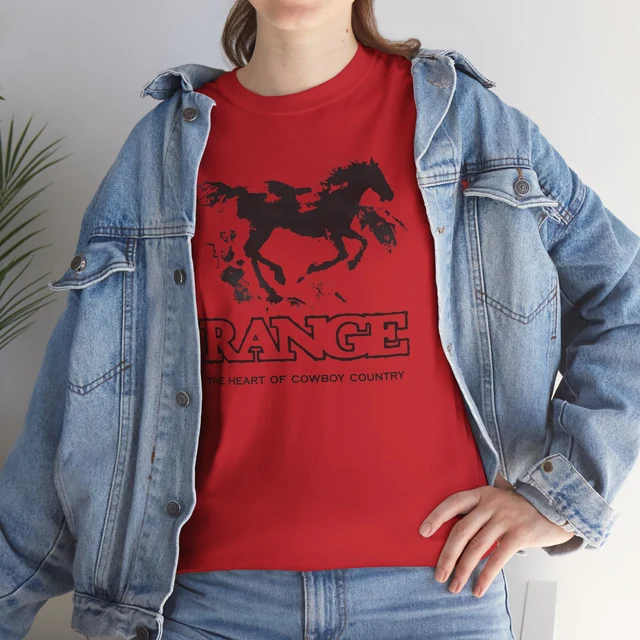
And of course, don’t forget your RANGE merchandise, new t-shirts, coffee mugs, and the 2027 Buckaroo Calendar available at the Great Basin Trading Co. today!